Bike to work day?

So did you bike to work today? May 25, kicked off Bike to Work month in some cities in Canada and the United States. Promoting cycling is not a bad thing, in fact it’s tough to find a good reason not to give cycling to work a try. Cycling is good exercise, uses no gas, saves on parking fees, and releases endorphins helping you chill on the way to and from work. What is not to like?
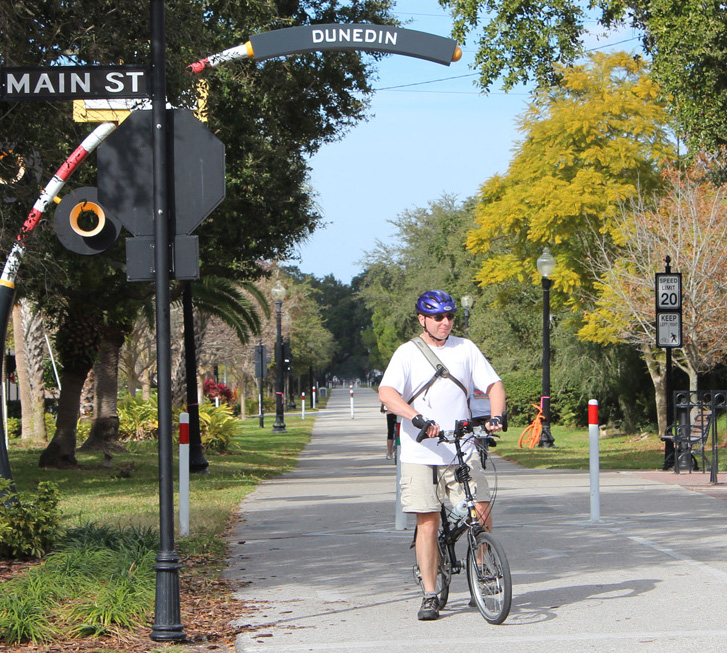
Commuting cyclist on bike path in Dunedin, Florida. This guy actually comes to a complete stop when signs indicate the need to do so. (Andrea Connell)

Commuting cyclist on bike path in Dunedin, Florida. This guy actually comes to a stop when signs indicate to do so. (Andrea Connell)

Well, maybe you just aren’t ready for it. First of all you need a working bicycle and somewhere to lock it, a safe cycling route and be comfortable on the road. There it is. It isn’t hard to sort out the regular commuter cyclists from the “I just grabbed this old thing from the garage cyclist.”

I can see you now, squished down on the seat, knees up around your ears. If you are actually wearing a helmet, it’s jauntily tipped back on your head. The backpack you are carrying is stuffed to the brink most likely with a complete change of clothes including shoes. There is a deafening squeak coming from the rusty crank arms on each pedal revolution and cobwebs stuck to the seat are billowing out behind you.

You are sweating. No one told you the 5 km ride was going to be work. You may be on the sidewalk. This is confusing to everyone. Especially if there is perfectly good bike lane adjacent to said sidewalk. Yet, if you are a wobbler, someone who just is not very balanced on a bike, maybe it is safer for everyone, except pedestrians, for you to be on the sidewalk. Or you may be rolling through stop signs. Who cares that you may face a fine for doing either?

You may even brave the ride back home and not call your significant other to pick you up from work.

You should be applauded for trying. The real test will be whether or not you do it again tomorrow.
The cheap person’s guide to getting started cycling

Cycling is often touted as an affordable transportation option and like most things cost is directly tied to quality. There are bikes and then there are bikes. Back in the day, Canadian Tire was the go-to place for dads to buy their kid’s first bike. Little metal two-wheeled affairs with training wheels and streamers flew out the door like wasps at a picnic.

Today a 24-speed CCM mountain bike sells for $129 on sale at Canadian Tire. This is not a performance bike. This 30 pound, steel bike will get you around town and your quadriceps will strengthen up quickly pushing it around. Either that or you will give up the first time you break into a sweat. Keep in mind it comes equipped with lower-quality components than an entry level Trek X-Caliber 9 mountain bike. The Trek has a nimble aluminum frame and higher quality, well everything, compared to the CCM but it also starts at $1,500.

In Canada, only four provinces: British Columbia, New Brunswick, Nova Scotia and Prince Edward Island, have a mandatory helmet law for all ages. In Alberta, Manitoba and Ontario only minors are required to wear a helmet. Saskatchewan, Quebec, Newfoundland and Labrador, the Yukon, Northwest Territories, and Nunavut have no helmet law. So while not legally mandated all across the country, wearing a helmet while riding is never a bad idea. The price of helmets range from $30 to over $300, depending on the features offered. A helmet with more venting, adjustable inside straps for better fit, and lighter composite materials will cost more. Canadian Tire has some adult helmets on sale for $30. These helmets have a yellow sticker warning, “For recreational riding only, but not trick bicycling or downhill mountain bike racing.” If you are going to do either of these things, you will have to buy a second, better helmet.

Riding a bike is thirsty work. You will need a water bottle and cage to put it in. The cage attaches to the down tube on the bike and both can be purchased for around $20. A rear rack is an absolutely essential piece of gear. The rack attaches to the seat stay and bolts to the bike frame on either side of the rear axle. Do not get the old metal kind called a “rat-trap”, its carrying capacity is one book. Who carries books anymore? A rear rack will cost around $45.

Panniers or carrier bags that clip to the rack come in all manner of sizes and materials. Bags can be bought in pairs or as separate pieces for as little as $45. These are a great way to carry any extra items on the bike, keeping your hands free and avoiding the “dreaded-grocery-bag-caught-in-front-wheel-wipe-out”, if you don’t take this advice, I hope you at least wear a helmet. The bag will interfere with riding and wiping out hurts and you will smack your head.

Forget the patch kit with the little tube of glue and mini silver cheese grater foil that comes with. Nobody knows what to do with that anyway. Buy the self-adhesive glue-less patches, for around $5. It would be in your best interest to learn how to change a flat, (F.Y.I, it is the tube that is flat inside the tire, not the tire itself). It’s not a bad idea to carry a spare tube as well, $8. Or carry your cell phone and hope someone in your contact list can pick you up if you get a flat tire.

A set of lights, white for the front and red for the back can be purchased for around $20. Lights make you and your bike visible on the road. A bell is also recommended to warn others of your presence, these are available for around $5.

You can get all the bike equipment you need to get started cycling at Canadian Tire for approximately $300. It’s an affordable option but keep in mind once you get some riding experience under your belt it won’t be long before you will want some equipment upgrades.

Taken for granted

One day after arriving in a very small town it became glaring obviously all the things I had taken for granted in an urban centre:

– Cineplex Odeon
– variety of grocery stores
– kale
– number of friends living within a 3 km radius
– President’s Choice banking kiosk
– Future Shop
– frozen blueberries for $3.99
– Bulk Barn
– chicken wings at Borealis
– butter chicken at Penny Whistle
– three-time weekly running group
– Toronto one hour away

Things I believe are necessary for northern B.C. living:

– Ford Ranger
– a tow bar
– winch
– booster cables
– an ATV
– fishing boat
– an Evinrude motor
– an acceptance of snow in May

Mother’s Day

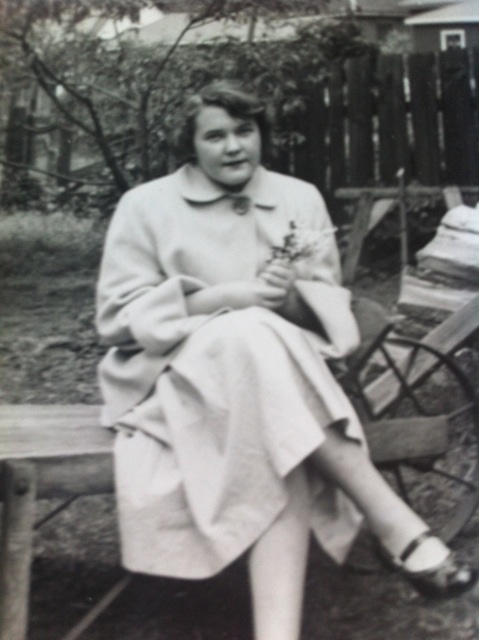
Helen Jean MacLellan, circa 1956 or 1957, aged 16 or 17 years old. (Photo  provided by Norma MacLellan.)

Helen Jean MacLellan, circa 1956 or 1957, aged 16 or 17 years old. (Photo provided by Norma MacLellan.)

Every year on the second Sunday of May I miss out on a tradition. I see flower sellers hawking bright bouquets near busy traffic corners. I hear radio DJs telling listeners to pick up the phone and call mom. I see tables of white-haired women enjoying a cup of coffee with women and men just a little less grey. I see men at the grocery store asking their children to pick out a balloon for mommy. I smell the spice-rubbed steak on barbecues around the neighbourhood.

I loved Mother’s Day as a child. My dad would fry up eggs, bacon and potato scones on his electric skillet. One of us five kids would carry the breakfast tray up to mom and sit on the bed watch her eat this special meal. The only difference from any other Sunday was my mother did not normally eat breakfast in bed.

I couldn’t wait to present her with gifts. China cups and saucers were a favourite gift because mom loved a good cup of tea. Other gifts of mine consisted of tiny mice figurines and balloon-skirted ladies holding parasols and pink pearls from the Sears costume jewelry clearance table. No matter the tackiness of the gift my mother always seemed genuinely happy to receive it.

On some Mothers’ Days our family of seven would go to mom’s mom for dinner. It was pretty crowded in Granny’s tiny house off the Queensway but Granny had raised six children of her own within those walls, so no biggie. Some years, depending on the weather, we would picnic at Sunnyside Beach in Toronto with both grannies in tow.

Yet ever since losing my mother to cancer when I was still a teenager I have felt left out of Mother’s Day. It’s a loss that never goes away. Mother’s Day isn’t for celebrating other people’s mothers; it’s about your own mom. Three decades into living without a mother, realizing she never saw me graduate from university or high school for that matter, never met my husband of twenty-three years or knew about my love of cycling, it hasn’t become easier; I have become accustomed to it.

I don’t get to have an adult relationship with my mother or spend a certain Sunday in May walking through a garden centre or having brunch with her. What I do get is to recall the smiles and the thanks for those childish gifts. Those childhood memories are going to have to stand.