Unknown's avatar

About andrea

I have two passions in life - 1. reading and 2. long-distance bicycle touring...

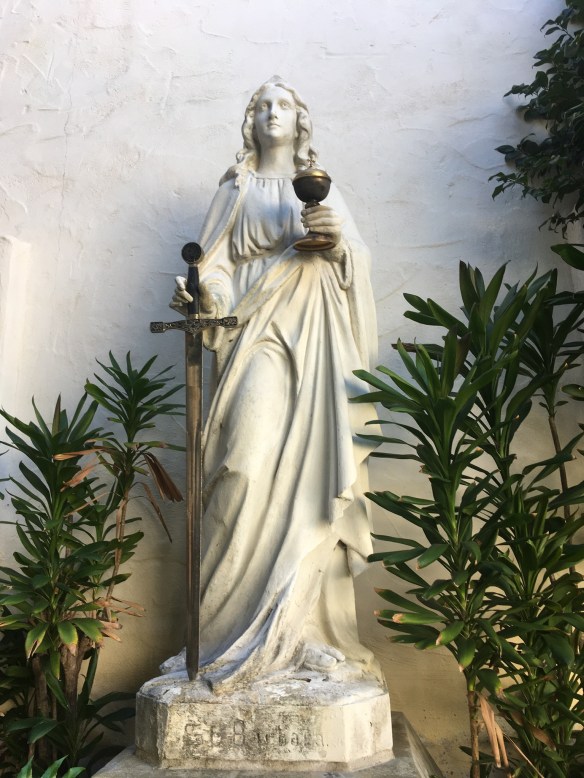
St. Barbara, Old Mission Santa Barbara

FF98A95F-7A10-4845-99A6-971256247AF5

Saint Barbara’s story is a terrible one as are most describing how mere mortals became Saints.

History has it Barbara lived in Syria during the fourth century when it was common to worship many gods.  In her mid-twenties she defied her father, Dioscorus, a wealthy landowner when she became dedicated to worshiping only one God after learning about Christianity from early Christians. Dioscorus could not abide and had her tortured mercilessly to try to encourage her to change her mind. When she would not, he beheaded her himself. Parent of the year I think not! The Lord gave Dioscorus his due, when he was hit by lightning and died shortly afterwards.

This statue of Saint Barbara is in the Cemetery garden at the Old Mission on Laguna Avenue in Santa Barbara, California. The mission was opened by Franciscan Friars on December 4, 1786. St. Barbara’s Feast Day in the Catholic Church calendar.


Shortest day of the year ride

Published in The Guelph Mercury December 15, 2015


The first year Ed Hummel planned the Shortest Day of the Year bike ride, organizing the troops was easy. He was the only one who showed up for the 40-kilometre round-trip from Cambridge to Paris Rail Trail. The next year was a repeat.

In 2012, year three, after talking up the ride to members of the local Great Canadian Bicycle Tours and the Waterloo Wanderers bicycle clubs, the number of attendees doubled to two. Hummel is still pretty proud of the 100 per cent increase in ridership that year.

This year’s ride takes place on December 20th at 10 a.m. from the Cambridge trailhead parking lot. Hummel, director of touring for the GCBT, and self appointed “head Popsicle” has kept the December tradition of riding the Cambridge-Paris Trail going; to take part in the ride is to earn a metaphorical badge of honour.

For those not familiar with the trail, get familiar with this local treasure. The trail, a converted railway bed, busy with walkers, runners and cyclists follows the Grand River south to Paris and beyond. Linking up with adjoining trails, a rider can cycle all the way to Port Dover and Hamilton; the Cambridge-Paris trail is also part of the official Trans Canada Trail. A mountain or hybrid bike with fatter tires is recommended on the trail.

Attendance at the Shortest Day ride has increased since Hummel’s inaugural solo ride – last year had a record 17 riders. Two of those intrepid souls decided to keep going all the way to Brantford and back. Hero biscuits all around!

Here is how it works. Riders, most of them members of the bike clubs, meet at the trailhead in on Water St., Hwy. 24, just south of Cambridge, with a plan to ride to Paris and meet up at the Brown Dog Cafe on Grand River Street before heading back. Cyclists don’t have to go all the way to Paris; if they turn around on the trail at the community of Glen Morris it will still give riders a 20-plus kilometre ride.

I asked Hummel if there was shame in turning around early (not for me but you know for a friend). “No shame in it. Anything goes,” he said. The idea is to ride and enjoy it.

The trail is wide, easy to follow and at this time of year the leafless trees should give riders a good glimpse of the Grand River, the railway bridges and the stone remnants of an old mill, approximately 10 kilometres into the ride.

Weather is always a factor – one year Hummel’s “windshield” (cyclist’s term for glasses) froze. The ride is weather dependent. People may remember the nightmare of freezing rain the area experienced a few days before Christmas of 2013. Drivers were asked to stay off the roads, cycling would have been ridiculous. The ride was canceled and rescheduled to the following Sunday, Hummel dubbed it the Almost Shortest Day of the Year ride.

The trail can also present some challenges. “Because it’s a gravel walking trail, and if it freezes peoples’ footprints will be frozen on the ground”, said Hummel. “This can make for a very bumpy ride.” If you have ever ridden on a gravelly, washboard country road it’s easy to understand what he means, I can feel my teeth tapping together already. One year, Hummel had to get off the trail just to stop his head from rattling and continue the ride on quiet East River Road into Paris. The road parallels the trail and if it’s plowed makes for a pleasant ride as well. Survival requires adaptation.

Hummel’s reason for the December ride is pretty straightforward. “I ride in the winter and I love getting outside. Riding in the basement isn’t that great. I only went downstairs once last year to ride on the trainer.”

Think of the kudos and sense of satisfaction earned by getting out for a winter trail ride. Be careful, it could become a yearly tradition.
Donate Bikes to Cuba

Published in The Guelph Mercury November 17, 2015


If you are one of the million Canadians heading to Cuba this year, due to the short flight, cheap digs and warm weather, consider getting in touch with Jeff Reid before you go. Reid is the force behind Bikes for Cuba, a volunteer organization of one that organizes donations of bicycles and gear to Cubans.

Reid travels to Cuba two, three, sometimes even four times annually. He has been doing this for the better part of 10 years now and not because he loves relaxing at resorts. The reason for his first venture to the island was to cycle. On one of his early bicycle trips, Reid met a coach who ran the cycling program at a local school. Thirteen kids were sharing one bike. Reid was shocked.

“I raced for the Canadian National Team, I grew up around bikes. My family was in the bike business and I always had good equipment. I just couldn’t believe it. So I left them my bike,” said Reid. “Then I called up old friends and got donations and sent more bikes.”

The desire to help out blossomed into his organization Bikes for Cuba. Over the last six or seven years, 325 bikes and thousands of pieces of equipment including clothes, shoes and helmets have been donated. Here is the thing, this isn’t a non-profit organization relying on government funding to run the show – Reid collects the donations, makes minor repairs, and boxes the bikes getting them flight-ready all on his own.

Tourists flying to Cuba have taken 99 per cent of the donations for him, Reid says. People have learned about his organization through word-of-mouth or by visiting his booth at the Toronto International Bicycle Show which takes place in early March each year.

Reid has made it hassle-free for people to volunteer to take the bikes with them to Cuba.

This is how it works. To take a bike to Cuba, people contact Reid through e-mail or telephone and he arranges to meet them at the Toronto airport with the boxed bike. Reid gives them the bike and a letter to the airline letting them know this is donation from Bikes for Cuba. He has an arrangement with many of the airlines that service Cuba to ship the bikes for free. At the other end, his Cuban friend, Jorge Feria, meets the traveler at the airport to pick up the bike. Feria then distributes the bikes and gear to the schools and clubs for recreation, provincial and national training programs.  He and Reid are in touch constantly. A picture gallery of some of the donated bikes are posted on the Bikes for Cuba website.

Accompanying a bike is not the only way to donate to the program. For those going to Cuba to cycle they can leave their bike behind once the trip is done. Or if Reid has a donated bike that fits you, you can take it to Cuba, do your ride and leave it behind when you are ready to come home. Arrangements can be made with Feria to pick up the bike.

There has been a growing demand for mountain bikes recently. If you have a used mountain bike in good working order you are no longer using, consider donating it.

Reid says his commitment to the cause takes up about a quarter of his day on average, between arranging to pick up donations and driving to the airport, on top of working full-time. Reid hasn’t received many corporate donations but recently Sugoi, the bicycle apparel company, surprised him. They donated 50 boxes of clothing and gear to Bikes for Cuba. My question about where he stores the donations was met with a laugh, “All over the house and in my garage,” he said.  “It’s crazy.”

For more information visit bikesforcuba.com

Pan Am Soccer 2015

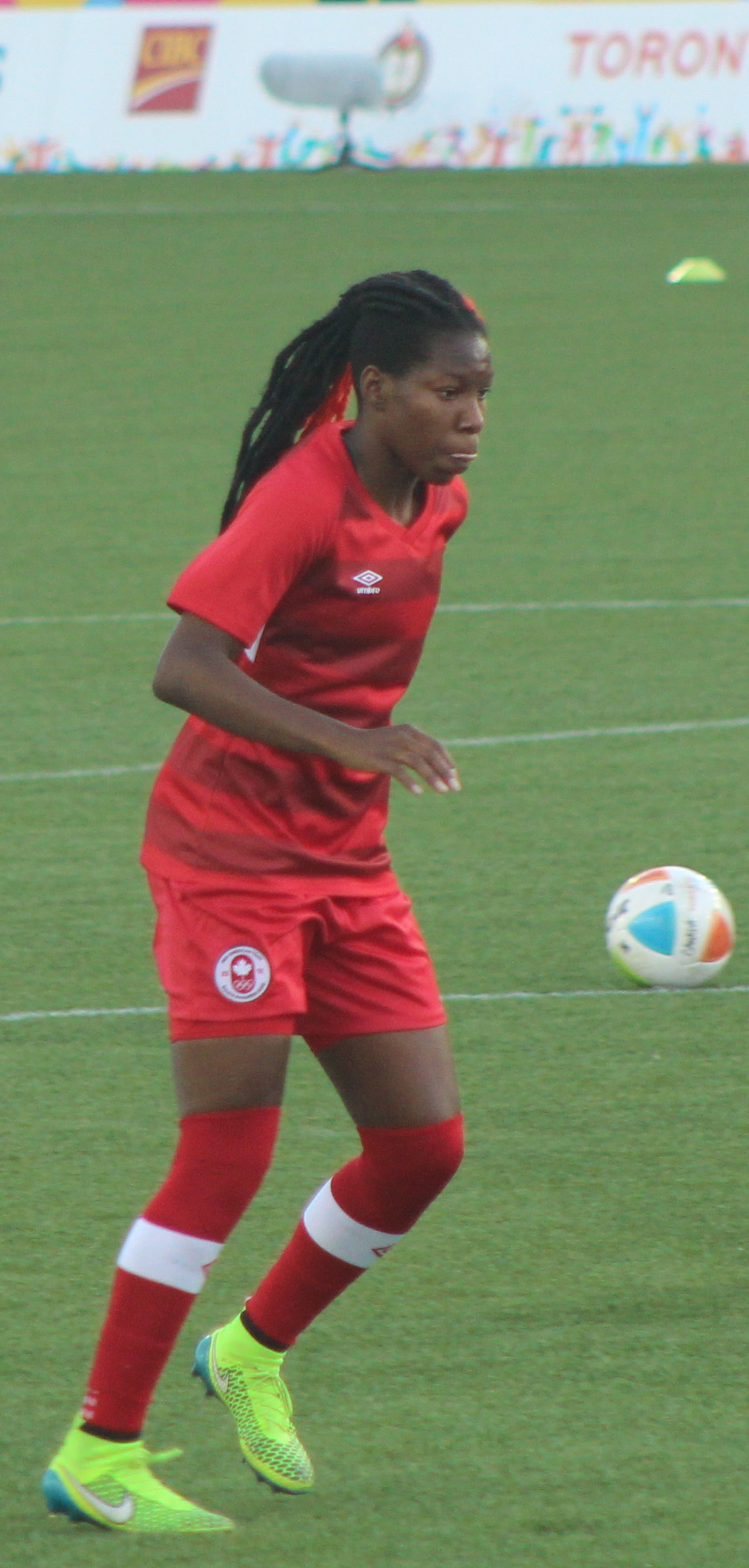
Kadiesha Buckanan warms up before the Canadian women's soccer team takes on Brazil in the Group B match at the Pan Am Games in Hamilton. Canada came out on the losing side of the 2-0 game in front of a cheering but disappointed crowd. (July 19, 2015 Andrea Connell)

Defender, Kadiesha Buckanan, 19, warms up before the Canadian women’s soccer team takes on Brazil in the Group B match at the Pan Am Games in Hamilton. Canada came out on the losing side of the 2-0 game in front of a cheering but disappointed crowd. (July 19, 2015 Andrea Connell)

Bike to work day?

So did you bike to work today? May 25, kicked off Bike to Work month in some cities in Canada and the United States. Promoting cycling is not a bad thing, in fact it’s tough to find a good reason not to give cycling to work a try. Cycling is good exercise, uses no gas, saves on parking fees, and releases endorphins helping you chill on the way to and from work. What is not to like?

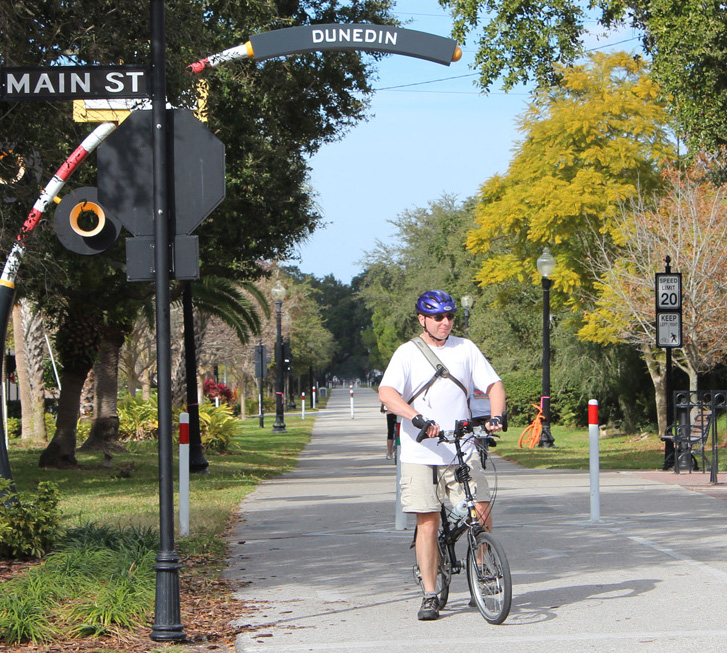
Commuting cyclist on bike path in Dunedin, Florida. This guy actually comes to a complete stop when signs indicate the need to do so. (Andrea Connell)

Commuting cyclist on bike path in Dunedin, Florida. This guy actually comes to a stop when signs indicate to do so. (Andrea Connell)

Well, maybe you just aren’t ready for it. First of all you need a working bicycle and somewhere to lock it, a safe cycling route and be comfortable on the road. There it is. It isn’t hard to sort out the regular commuter cyclists from the “I just grabbed this old thing from the garage cyclist.”

I can see you now, squished down on the seat, knees up around your ears. If you are actually wearing a helmet, it’s jauntily tipped back on your head. The backpack you are carrying is stuffed to the brink most likely with a complete change of clothes including shoes. There is a deafening squeak coming from the rusty crank arms on each pedal revolution and cobwebs stuck to the seat are billowing out behind you.

You are sweating. No one told you the 5 km ride was going to be work. You may be on the sidewalk. This is confusing to everyone. Especially if there is perfectly good bike lane adjacent to said sidewalk. Yet, if you are a wobbler, someone who just is not very balanced on a bike, maybe it is safer for everyone, except pedestrians, for you to be on the sidewalk. Or you may be rolling through stop signs. Who cares that you may face a fine for doing either?

You may even brave the ride back home and not call your significant other to pick you up from work.

You should be applauded for trying. The real test will be whether or not you do it again tomorrow.

The cheap person’s guide to getting started cycling

Cycling is often touted as an affordable transportation option and like most things cost is directly tied to quality. There are bikes and then there are bikes. Back in the day, Canadian Tire was the go-to place for dads to buy their kid’s first bike. Little metal two-wheeled affairs with training wheels and streamers flew out the door like wasps at a picnic.

Today a 24-speed CCM mountain bike sells for $129 on sale at Canadian Tire. This is not a performance bike. This 30 pound, steel bike will get you around town and your quadriceps will strengthen up quickly pushing it around. Either that or you will give up the first time you break into a sweat. Keep in mind it comes equipped with lower-quality components than an entry level Trek X-Caliber 9 mountain bike. The Trek has a nimble aluminum frame and higher quality, well everything, compared to the CCM but it also starts at $1,500.

In Canada, only four provinces: British Columbia, New Brunswick, Nova Scotia and Prince Edward Island, have a mandatory helmet law for all ages. In Alberta, Manitoba and Ontario only minors are required to wear a helmet. Saskatchewan, Quebec, Newfoundland and Labrador, the Yukon, Northwest Territories, and Nunavut have no helmet law. So while not legally mandated all across the country, wearing a helmet while riding is never a bad idea. The price of helmets range from $30 to over $300, depending on the features offered. A helmet with more venting, adjustable inside straps for better fit, and lighter composite materials will cost more. Canadian Tire has some adult helmets on sale for $30. These helmets have a yellow sticker warning, “For recreational riding only, but not trick bicycling or downhill mountain bike racing.” If you are going to do either of these things, you will have to buy a second, better helmet.

Riding a bike is thirsty work. You will need a water bottle and cage to put it in. The cage attaches to the down tube on the bike and both can be purchased for around $20. A rear rack is an absolutely essential piece of gear. The rack attaches to the seat stay and bolts to the bike frame on either side of the rear axle. Do not get the old metal kind called a “rat-trap”, its carrying capacity is one book. Who carries books anymore? A rear rack will cost around $45.

Panniers or carrier bags that clip to the rack come in all manner of sizes and materials. Bags can be bought in pairs or as separate pieces for as little as $45. These are a great way to carry any extra items on the bike, keeping your hands free and avoiding the “dreaded-grocery-bag-caught-in-front-wheel-wipe-out”, if you don’t take this advice, I hope you at least wear a helmet. The bag will interfere with riding and wiping out hurts and you will smack your head.

Forget the patch kit with the little tube of glue and mini silver cheese grater foil that comes with. Nobody knows what to do with that anyway. Buy the self-adhesive glue-less patches, for around $5. It would be in your best interest to learn how to change a flat, (F.Y.I, it is the tube that is flat inside the tire, not the tire itself). It’s not a bad idea to carry a spare tube as well, $8. Or carry your cell phone and hope someone in your contact list can pick you up if you get a flat tire.

A set of lights, white for the front and red for the back can be purchased for around $20. Lights make you and your bike visible on the road. A bell is also recommended to warn others of your presence, these are available for around $5.

You can get all the bike equipment you need to get started cycling at Canadian Tire for approximately $300. It’s an affordable option but keep in mind once you get some riding experience under your belt it won’t be long before you will want some equipment upgrades.

Taken for granted

One day after arriving in a very small town it became glaring obviously all the things I had taken for granted in an urban centre:

– Cineplex Odeon
– variety of grocery stores
– kale
– number of friends living within a 3 km radius
– President’s Choice banking kiosk
– Future Shop
– frozen blueberries for $3.99
– Bulk Barn
– chicken wings at Borealis
– butter chicken at Penny Whistle
– three-time weekly running group
– Toronto one hour away

Things I believe are necessary for northern B.C. living:

– Ford Ranger
– a tow bar
– winch
– booster cables
– an ATV
– fishing boat
– an Evinrude motor
– an acceptance of snow in May